
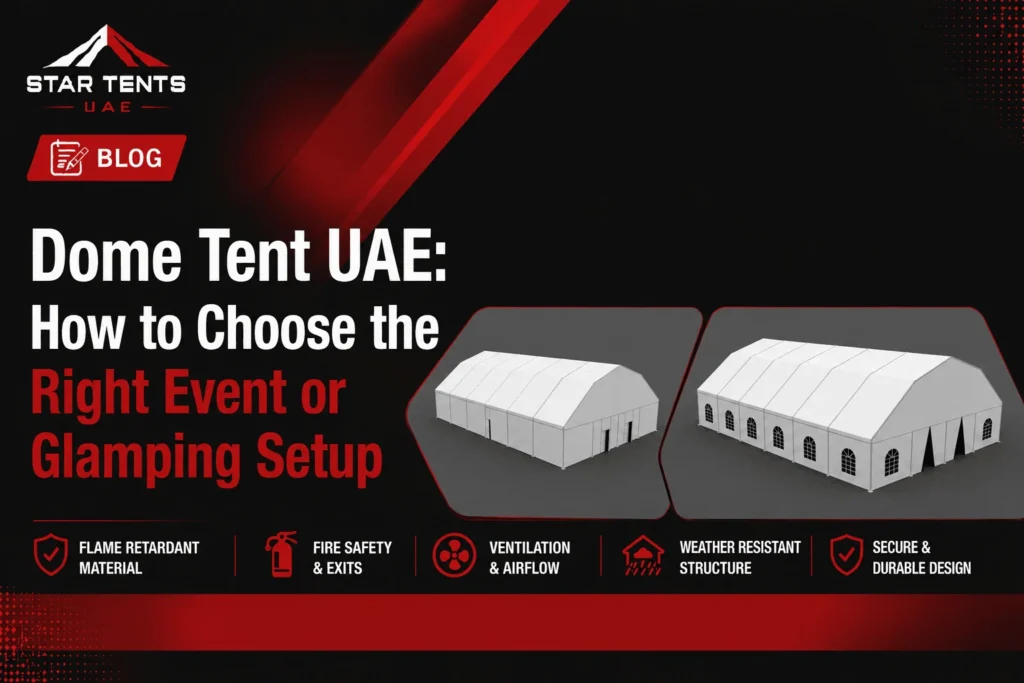
A Dome Tent can turn an open plot into a striking event venue, private dining space, branded activation or luxury outdoor stay. However, selecting the structure based only on its appearance can create problems later.
The dome must fit the available land, expected guest count, interior layout, cooling plan and installation schedule. Moreover, a wedding requires a different setup from a desert glamping unit or corporate exhibition.
This guide explains how to plan a Dome Tent UAE project, compare common applications and prepare the right information before requesting a rental or purchase quotation.
A dome tent uses an interconnected frame to create its recognizable rounded profile. As a result, the structure looks architectural rather than temporary and can become part of the visual identity of an event or venue. The curved interior also gives designers a distinctive surface for lighting, projections, suspended décor and branded displays. In addition, the open floor can support different layouts without the visual interruption of a traditional central pole.
Event companies often choose dome structures for projects that need more than basic outdoor coverage. Meanwhile, hospitality operators may use them to create scenic guest experiences in deserts, mountains, gardens or beachfront locations. However, the word “dome” covers many possible sizes and specifications. Therefore, clients should confirm the actual frame, dimensions, cover, entrance design and installation method instead of selecting a structure from photographs alone.
The same dome shape can support several commercial and private applications. Nevertheless, each use requires a different floor plan and operating setup.
Wedding planners can transform a dome into a stylish ceremony space. They can also use it as a reception lounge, dining venue or private bridal area. Moreover, lighting, floral décor and carefully planned seating can turn the structure into an impressive evening entertainment setting.
Before choosing the size, planners should calculate space for more than tables and chairs. The final layout may also require:
Consequently, two weddings with the same number of guests may need different dome sizes.
Brands can turn the exterior of a Dome Tent into a bold visual display. They can also use custom graphics, logos and lighting to strengthen brand visibility. Meanwhile, the interior can support screens, presentation areas and product displays. Dome structures may suit product launches, immersive exhibitions, promotional installations and media events. Their curved surfaces can also support creative lighting or projection concepts, subject to the approved technical setup. However, production teams should confirm electrical load, screen positions, equipment access and cable routes before finalizing the interior design.
Glamping operators can use a Dome Tent to create a stronger connection with the surrounding landscape. At the same time, they can offer guests more comfort, privacy and visual appeal than a basic camping setup. Moreover, the dome helps turn the stay into a memorable outdoor experience.
Ras Al Khaimah already promotes desert and beachfront glamping experiences that combine natural surroundings with features such as air conditioning and modern guest facilities. Therefore, operators should treat comfort planning as a central part of the project rather than an optional finishing touch.
A dome used for accommodation may need space for:
Furthermore, a group of accommodation domes requires site-wide planning for guest paths, utilities, housekeeping and emergency access.
Hospitality businesses can use Dome Tents to create fresh and memorable guest experiences. At the same time, they can avoid the standard look of a conventional event marquee. Moreover, the dome adds a modern, stylish and distinctive feel to the venue. A hotel or resort may use a dome for private dining, afternoon tea, seasonal lounges, wellness activities or VIP events. Beach clubs may also create temporary entertainment or hospitality zones around the structure.
Still, coastal sites require careful assessment. Delivery access, ground conditions, moisture exposure, cleaning requirements and venue restrictions may all influence the final design.
Restaurants and cafés can use a Dome Tent to create a stylish enclosed outdoor dining space. They can also turn it into a seasonal seating extension or private booking area. Moreover, the dome adds comfort, privacy and a distinctive atmosphere for guests. However, restaurant operators need to plan staff routes as carefully as guest seating. Kitchen access, food service, ventilation, waste removal and emergency exits should form part of the initial layout.
Real estate developers can use Dome Tents to create impressive spaces for property launches and exhibitions. They can also host community events or set up temporary visitor centers. Moreover, the dome helps present the development in a modern and memorable setting.
A developer may add property models, digital screens, reception desks and private consultation areas. Therefore, the structure should provide enough room for both the display elements and the expected visitor flow.
Guest count provides a useful starting point, but it does not determine the final size on its own.
For example, a standing corporate reception uses space differently from a banquet. Likewise, a glamping suite with a bathroom, bed and lounge requires more room than a simple sleeping unit.
Before asking for a size recommendation, prepare the following information:
Measure the full usable plot rather than the visible open area. In addition, identify walls, trees, pathways, underground services, lighting poles and other obstacles.
The installation team may also need working space outside the final footprint.
State the expected number of people and explain how they will use the structure. Mention whether the arrangement will include standing guests, theatre seating, dining tables, beds or mixed zones.
List stages, screens, counters, beds, bars, kitchen equipment and decorative installations. Otherwise, the recommended size may cover the guests but leave too little room for the actual event setup.
Plan how guests will enter, move through and leave the structure. Furthermore, separate service access may help catering staff, production teams and cleaners work without disrupting visitors.
State the season, operating hours and expected electrical equipment. The supplier can then review possible air-conditioning provisions, power distribution and cable routes.
The right choice mainly depends on project duration and frequency of use.
Rental usually suits:
The rental quotation should state what it includes. For example, confirm transportation, installation, dismantling, flooring, lighting and other additions separately.
Competitor listings in the UAE show that dome rental prices can vary significantly according to size and capacity, which reinforces the need for a project-specific quotation rather than a general price assumption.
Purchase may suit:
However, ownership also creates responsibilities. The buyer must plan storage, maintenance, inspections, cleaning and possible relocation.
Therefore, compare the total operating requirements instead of comparing only the first rental and purchase prices.
Clients use dome tents for weddings, corporate events, exhibitions, glamping accommodation, resort lounges, restaurants, property launches and production projects.
The project may include air-conditioning provisions. However, the cooling requirement depends on the structure’s size, cover, occupancy, season and operating hours.
Short-term rental may suit one-day events. Nevertheless, delivery, installation and dismantling schedules can extend beyond the event hours, so confirm the complete rental period with the supplier.
The cost depends on size, location, rental period, flooring, cooling, transport, installation and customization. Therefore, request an itemized quotation based on the actual project.
Tell us about your tent or shade structure requirement, and our team will respond within 24 hours with pricing and availability — anywhere in the UAE.
WhatsApp us